Prolonged solitary confinement
Just MercyProlonged solitary confinement is not simply separation from other prisoners: in the cases described here, it is an intensely restrictive regime that limits movement and human contact while making distress or resistance grounds for further isolation. Ian Manuel’s experience at Apalachee Correctional Institution gives this system its starkest measure: imprisoned at thirteen, he spent eighteen uninterrupted years in solitary confinement, where repeated self-harm and suicide attempts were met by extensions of his isolation.
Definition and Conditions
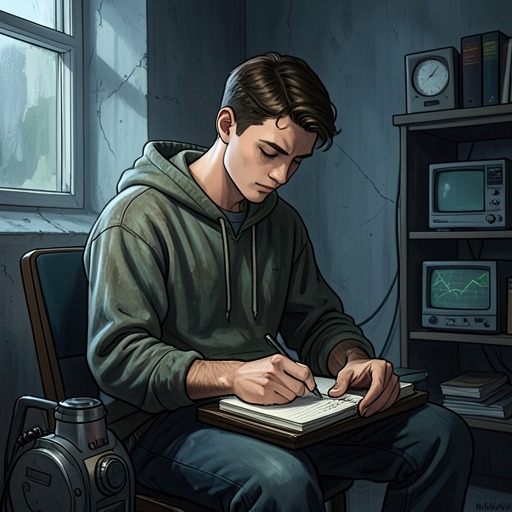
The book distinguishes solitary confinement from ordinary imprisonment through its physical enclosure and its rules of contact. At Apalachee, Manuel lived in a concrete cell about the size of a walk-in closet. Meals came through a slot; he did not see other prisoners or touch, or even approach, another person. He received three showers a week and, a few times a week, forty-five minutes of exercise in a small caged area. For the rest of the time, he remained alone in the cell, week after week and month after month.
The regime also made ordinary expressions of distress liable to prolong the confinement. An insubordinate remark or refusal to follow an officer’s order could mean sleeping on the concrete floor without a mattress. Shouting, screaming, refusing food, mutilating himself, or complaining to officers could each bring an extension. The arrangement thus offered little route out of isolation through compliance or through asking for help: conduct that signaled distress could itself lengthen the punishment.
Manuel’s placement in solitary began with his vulnerability in an adult prison. After a lawyer advised him to plead guilty while mistakenly assuring him that he would receive fifteen years, the judge imposed life without parole. Though thirteen, Manuel was sent to Apalachee Correctional Institution, one of Florida’s toughest prisons. Staff could not find a uniform small enough; they cut six inches from the bottom of the smallest pair of pants. Because juveniles in adult prisons were five times more likely to be sexually assaulted, staff put the boy, who was small for his age, in solitary confinement. The measure intended to separate him from that danger also subjected him to years without ordinary human contact.
Solitary confinement also appears in the book’s account of death row, where it is part of the punishment imposed on condemned prisoners. Death-row prisoners were locked alone in small cells for twenty-three hours a day, with limited opportunities for exercise and visitation, and were held close to the electric chair. The book emphasizes the exceptional character of placing Walter McMillian and Ralph Myers there before trial: they had not been convicted, yet were subjected to a form of punitive confinement reserved for condemned inmates.
Psychological Effects and the Possibility of Contact
For Ian Manuel, isolation did not merely remove ordinary company; it narrowed the forms of contact through which he could feel present to other people. During a photo session, he later wrote to Bryan Stevenson that the pictures mattered because he wanted to show the world he was alive and to look at them and feel alive. He had only $1.75 in his prison account and asked how many photographs a dollar would buy. The session had taken place on his deceased mother’s birthday, a coincidence he found symbolic. He recalled the handshakes as welcome physical contact in a life deprived of sensation, and said he replayed visits in his mind after visitors left. The photographs and brief visits became things he could keep and revisit when direct human contact was scarce.
A monthly telephone call also opened a sustained connection beyond the prison. On Christmas Eve 1992, Manuel called Debbie Baigre, the woman he had shot, and apologized with visible emotional force. Baigre, who had recovered physically and was pursuing bodybuilding and a women’s-health magazine, was stunned but moved. Their first call led to regular correspondence; she became one of the few people encouraging him as his despair deepened. After years of communication, Baigre wrote to the judge that Manuel’s sentence was too harsh and his confinement inhumane, and she also spoke to prison officials and the press. Her advocacy held two realities together: she did not minimize the recklessness of his crime, but argued that the system was treating a troubled thirteen-year-old as though he had not been a child.
The effects of long isolation also frame the account of Anthony Ray Hinton, who was imprisoned on Alabama’s death row for nearly thirty years, most of it in solitary at Holman Correctional Facility. His cell measured five by seven feet and stood down the hall from the execution chamber. During the years when executions were carried out in the electric chair, Hinton said he could smell burning flesh after midnight executions. His confinement ended only after new testing confirmed his innocence and he was released in 2015. Set beside Manuel’s later release, Hinton’s account makes the cell more than a site of separation: it is a place where years of confinement and the machinery of execution were brought into close physical proximity.
Manuel was released by Florida in November 2016. The woman he had been convicted of shooting embraced him, and they shared dinner before he traveled to Montgomery to join the Equal Justice Initiative’s reentry program. A few months later, he performed one of his poems at the organization’s annual event in New York City; he now writes and performs spoken-word poetry. These later relationships and public work do not erase the years of isolation, but they mark a change in the conditions of his life—from a world reduced to a cell, a slot, and occasional visits to one in which he could meet Baigre, enter a community program, and speak before an audience.
Enclosure Beyond the Solitary Cell
The book also shows how confinement could be made visible through architecture even outside a formally designated solitary unit. At Santa Rosa Correctional Facility, a forty-by-forty-foot room held more than two dozen incarcerated men, while three metal cages, each about four feet square and six feet tall, stood in one corner. Joe Sullivan sat in the third cage in his wheelchair, facing the wall. When officers unlocked it for a legal visit, the wheelchair’s spokes caught against the bars, and they could not move it out. The scene does not identify Joe’s cage as solitary confinement, but it makes physical isolation concrete: even a visit with his attorney required the prison to release his chair from the enclosure.
Long incarceration also left people who had entered prison as children with practical needs that release alone could not resolve. The Equal Justice Initiative created a re-entry program for clients who had spent many years in prison after childhood incarceration, offering housing, job training, life-skills support, counseling, and other services. The program’s design acknowledged that leaving a cell did not automatically restore the relationships, resources, or everyday capacities that confinement had interrupted; the organization told judges and parole boards it would help clients make that transition.
Protection, Punishment, and the Meaning of Confinement
The account exposes a contradiction at the heart of isolation imposed on children in adult prisons: a response to their heightened vulnerability could itself become a sustained source of harm. At Apalachee, staff placed Ian Manuel in solitary because juveniles there faced a sharply increased risk of sexual assault, yet the conditions that followed left him alone for eighteen years and made visible distress grounds for further confinement. The book does not treat the protective rationale as an answer to the consequences; instead, it shows how a measure meant to shield a child could become a regime from which ordinary contact and relief were nearly absent. Across the cases, solitary confinement signifies not only locked space but also the human costs of systems that keep a person physically contained while restricting the relationships through which life beyond punishment might remain imaginable.